Child trampling incident
The Child trampling incident is the first narrated encounter with Edward Hyde, a seemingly motiveless act of cruelty that introduces the central mystery of the novel and establishes Hyde's inhuman, Juggernaut-like nature. The event is recounted by Mr. Richard Enfield to his kinsman Mr. Utterson during one of their Sunday walks, and it is this story that first links the sinister door in the by-street to the respectable Dr. Henry Jekyll, setting the entire plot in motion.
The Incident
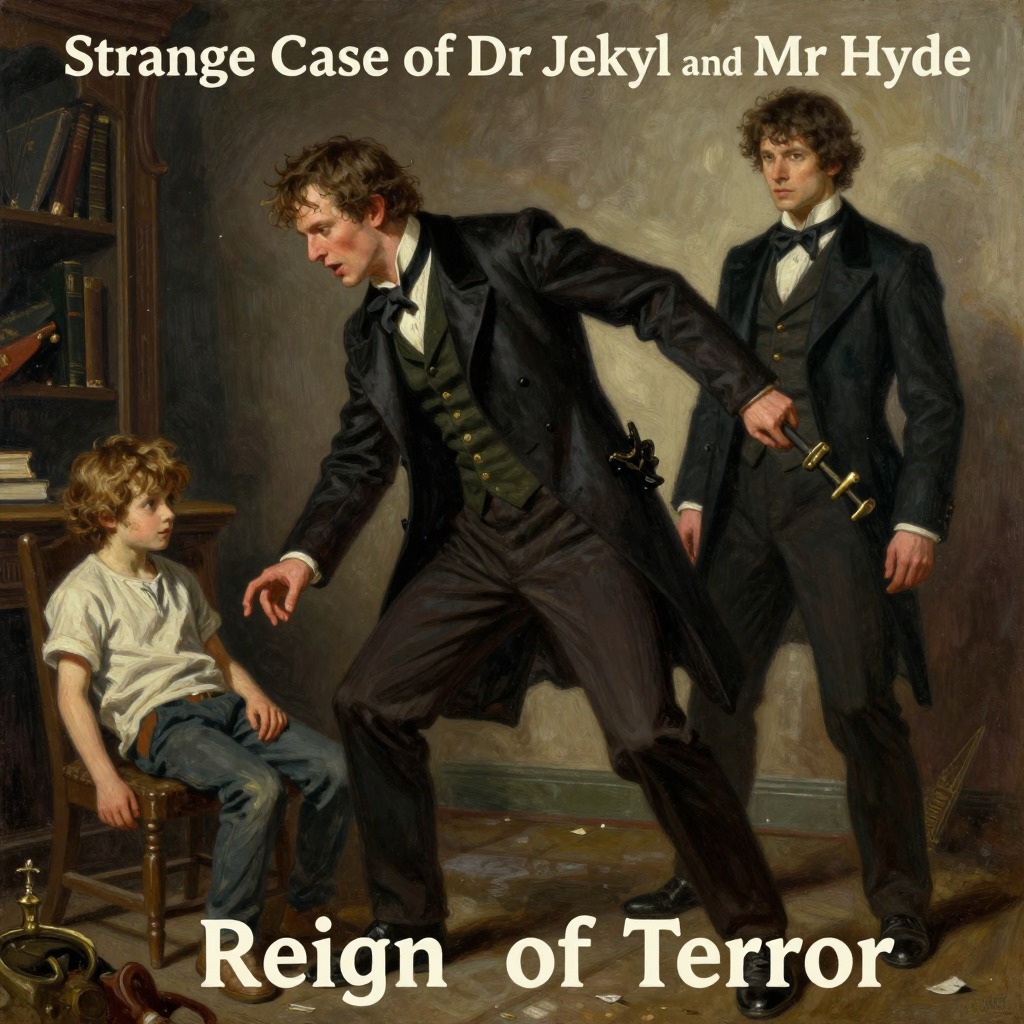
Enfield describes coming home at about three o'clock on a black winter morning through a part of London where there was literally nothing to be seen but lamps. Street after street lay empty and lighted up as if for a procession. In this state of mind, when a man begins to long for the sight of a policeman, he saw two figures: a little man stumping along eastward at a good walk, and a girl of maybe eight or ten who was running as hard as she could down a cross street. The two ran into one another naturally enough at the corner, and then came the horrible part of the thing: the man trampled calmly over the child's body and left her screaming on the ground. Enfield emphasizes that it sounds nothing to hear, but it was hellish to see. It wasn't like a man; it was like some damned Juggernaut.
The Aftermath and the Crowd
Enfield gave a few halloa, took to his heels, collared the gentleman, and brought him back to where there was already quite a group about the screaming child. The man was perfectly cool and made no resistance, but gave Enfield one look, so ugly that it brought out the sweat on him like running. The people who had turned out were the girl's own family, and pretty soon the doctor, for whom she had been sent, put in his appearance. The child was not much the worse, more frightened, according to the Sawbones. But there was one curious circumstance. Enfield had taken a loathing to the gentleman at first sight. So had the child's family, which was only natural. But the doctor's case was what struck him. The doctor was the usual cut and dry apothecary, of no particular age and colour, with a strong Edinburgh accent and about as emotional as a bagpipe. Yet he was like the rest of them: every time he looked at the prisoner, Enfield saw that Sawbones turn sick and white with desire to kill him. Enfield knew what was in his mind, just as he knew what was in Enfield's. Killing being out of the question, they did the next best. They told the man they could and would make such a scandal out of this as should make his name stink from one end of London to the other. If he had any friends or any credit, they undertook that he should lose them. All the time, as they were pitching it in red hot, they were keeping the women off him as best they could for they were as wild as harpies. Enfield never saw a circle of such hateful faces; and there was the man in the middle, with a kind of black sneering coolness—frightened too, Enfield could see that—but carrying it off, sir, really like Satan.
The Payment and the Door
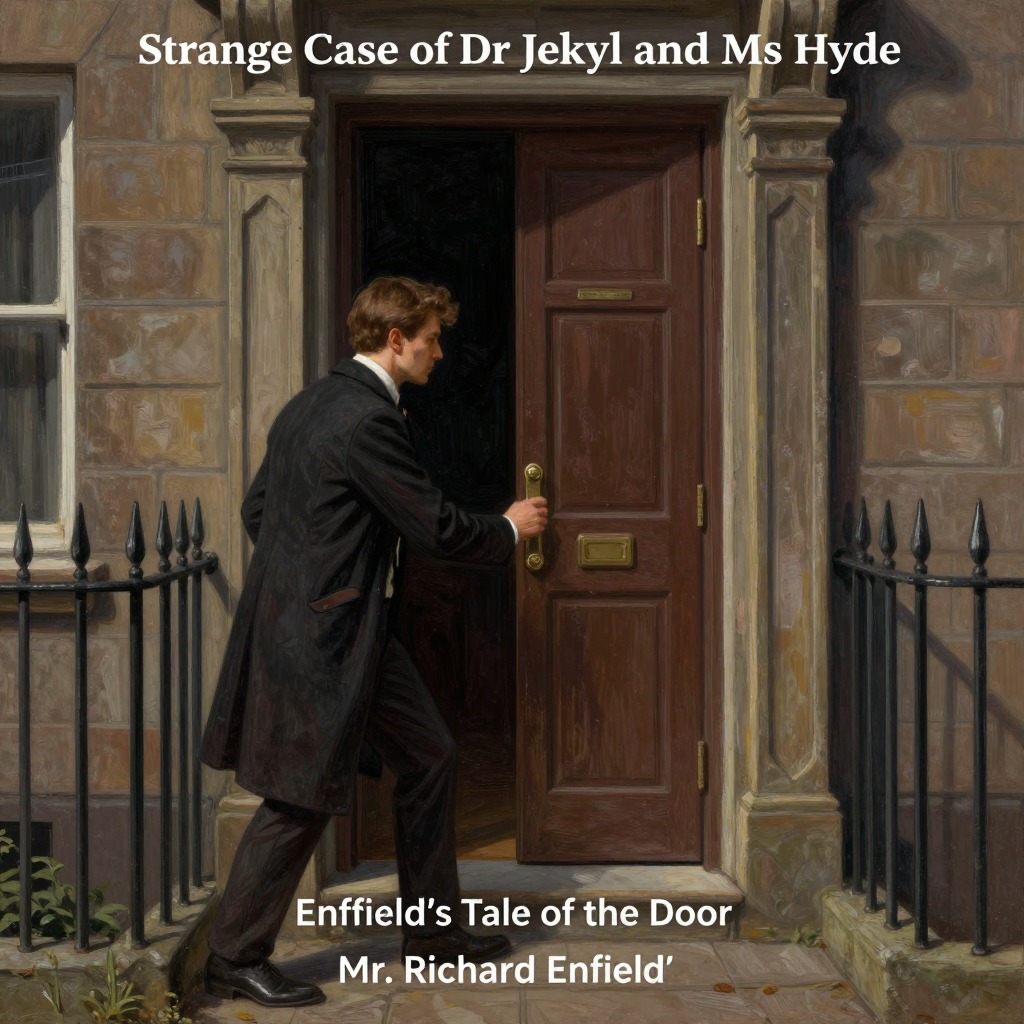
The man, speaking with a kind of black sneering coolness, said, "If you choose to make capital out of this accident, I am naturally helpless. No gentleman but wishes to avoid a scene. Name your figure." The crowd screwed him up to a hundred pounds for the child's family; he would have clearly liked to stick out, but there was something about the lot of them that meant mischief, and at last he struck. The next thing was to get the money, and he carried them to that place with the door—whipped out a key, went in, and presently came back with the matter of ten pounds in gold and a cheque for the balance on Coutts's, drawn payable to bearer and signed with a name that Enfield cannot mention, though it's one of the points of his story, but it was a name at least very well known and often printed. The figure was stiff, but the signature was good for more than that if it was only genuine. Enfield took the liberty of pointing out to his gentleman that the whole business looked apocryphal, and that a man does not, in real life, walk into a cellar door at four in the morning and come out with another man's cheque for close upon a hundred pounds. But he was quite easy and sneering. "Set your mind at rest," says he, "I will stay with you till the banks open and cash the cheque myself." So they all set off, the doctor, and the child's father, and their friend and Enfield himself, and passed the rest of the night in Enfield's chambers; and next day, when they had breakfasted, went in a body to the bank. Enfield gave in the cheque himself, and said he had every reason to believe it was a forgery. Not a bit of it. The cheque was genuine.
Significance and Revelation
This incident is the first concrete revelation of Edward Hyde's existence and his connection to a respectable, celebrated man. It establishes Hyde as a figure of pure, inexplicable evil, capable of casual cruelty that provokes a universal, visceral hatred in everyone who witnesses it. The event also introduces the door in the by-street as a place of mystery, which Enfield dubs "Black Mail House," and it is the catalyst for Mr. Utterson's investigation, as he recognizes the name on the cheque and becomes consumed with a desire to see the face of the man who could inspire such loathing.